



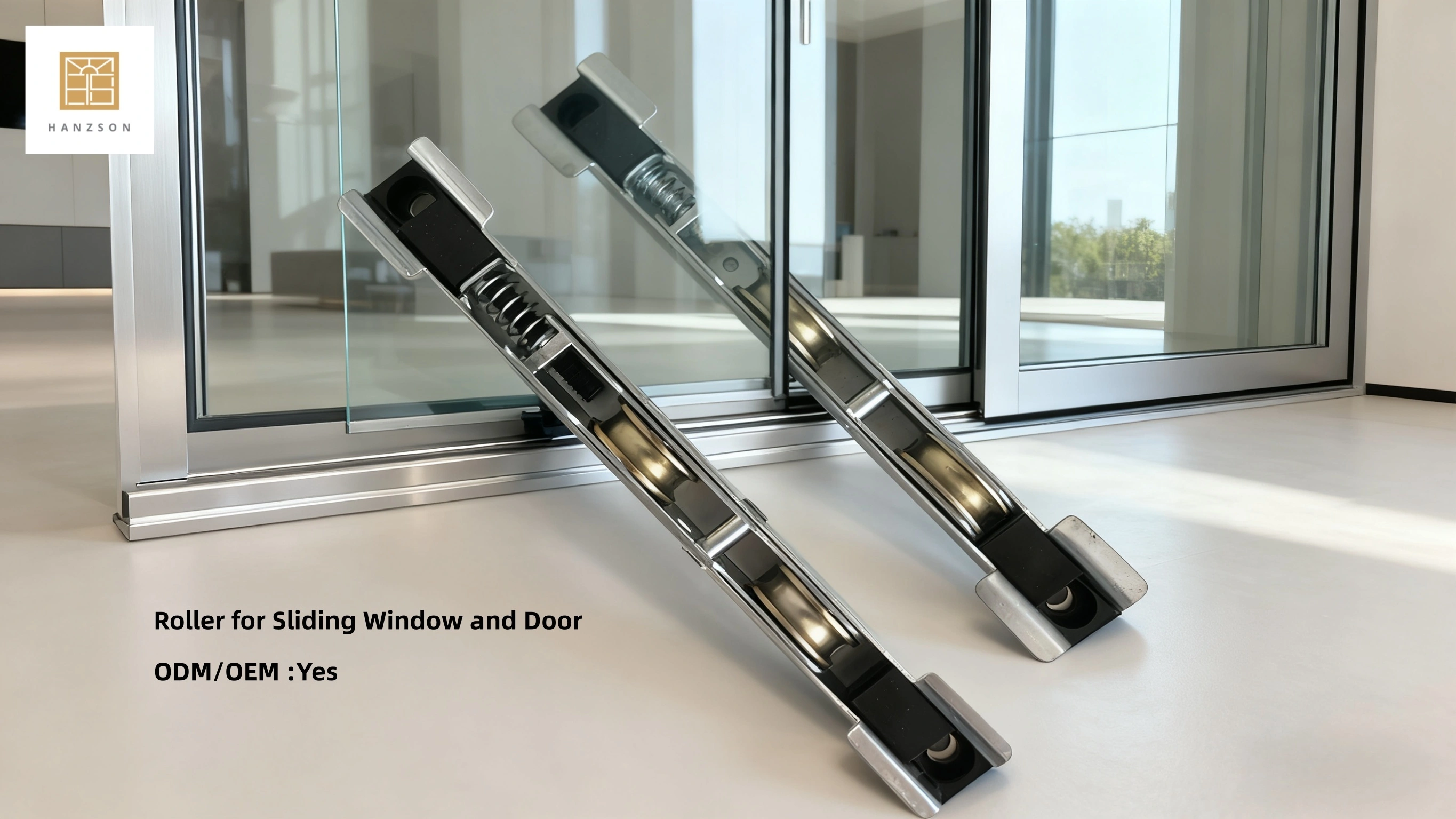
Copper wheels made of stainless steel are used to slide at the bottom of doors and windows to facilitate the sliding of doors and windows.
1. Stainless Steel Housing/Body
-
Function: This forms the main structure, chassis, or bracket of the roller.
-
Key Advantage: Corrosion Resistance.
-
Stainless steel is highly resistant to rust and corrosion, making it ideal for humid environments like bathrooms, kitchens, or coastal areas.
-
It provides excellent structural strength and durability, ensuring the roller mechanism remains intact and secure over a long period.
-
2. Bronze (or Bronze Alloy) Wheel
-
Function: This is the actual wheel that makes contact with the track and rolls.
-
Key Advantage: Self-Lubrication & Wear Resistance.
-
Bronze is a "self-lubricating" material. The graphite within the bronze alloy creates a low-friction surface, allowing for exceptionally smooth and quiet operation.
-
It is resistant to wear and deformation, even under heavy loads. This prevents the wheel from developing flat spots and ensures consistent performance.
-
Bronze is softer than steel, which makes it less likely to damage or wear down the aluminum or metal track it runs on.
-
Combined Advantages:
By combining these two materials, this roller type offers a superior balance:
-
Durability: The stainless steel body resists rust and structural failure.
-
Smooth Operation: The bronze wheel ensures quiet, effortless gliding.
-
Low Maintenance: The self-lubricating nature of bronze reduces the need for frequent oiling.
-
Long Lifespan: Both materials are known for their longevity, making this a premium and reliable choice.
Common Applications:
-
Heavy sliding glass doors
-
High-quality aluminum windows and doors
-
Commercial storefronts
-
Any application where smooth, quiet, and long-lasting performance is required.
In summary, a stainless steel roller with a bronze wheel is a high-performance hardware component that leverages the strength and corrosion resistance of stainless steel with the smooth, self-lubricating properties of bronze for an exceptional user experience.